News
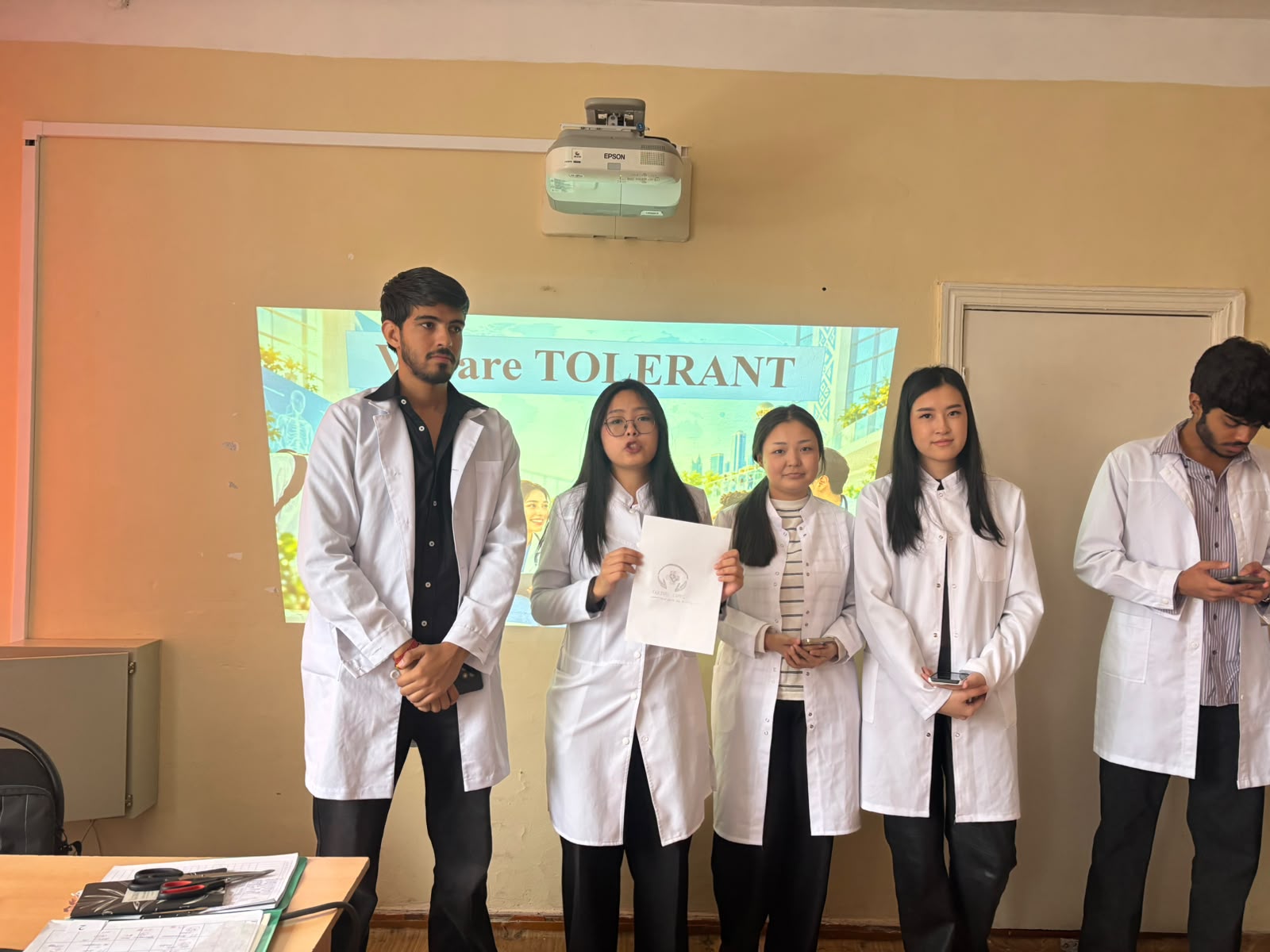
As part of explaining the key provisions of the Address of the President of the Republic of Kazakhstan Kassym-Jomart Tokayev to the people of Kazakhstan, “Current Tasks of Kazakhstan in a New Historical Cycle,” dated October 28, 2026, and on the eve of the International Day for Tolerance, which is observed on November 16, an interdisciplinary event on the topic of “Code of the Republic: Unity of Traditions, Financial Culture and Path to Success” was held at the Department of History of Kazakhstan and Social-Political Sciences of “Karaganda Medical University named after Petr Pospelov” NCJSC.
Particular attention during the event was given to the provisions of the Address concerning the strengthening of social unity and harmony. As the Head of State emphasized: “...above all, society needs unity and harmony. Without this, there will be no reforms and no progress.” The President’s well-defined development goals of Kazakhstan as “a united country with equal opportunities for everyone” was also closely aligned with the topic of the meeting. These ideas provided a meaningful basis for discussing the role of mutual respect, intercultural dialogue, social responsibility, education and young people’s personal initiative in the development of the modern Kazakhstan.
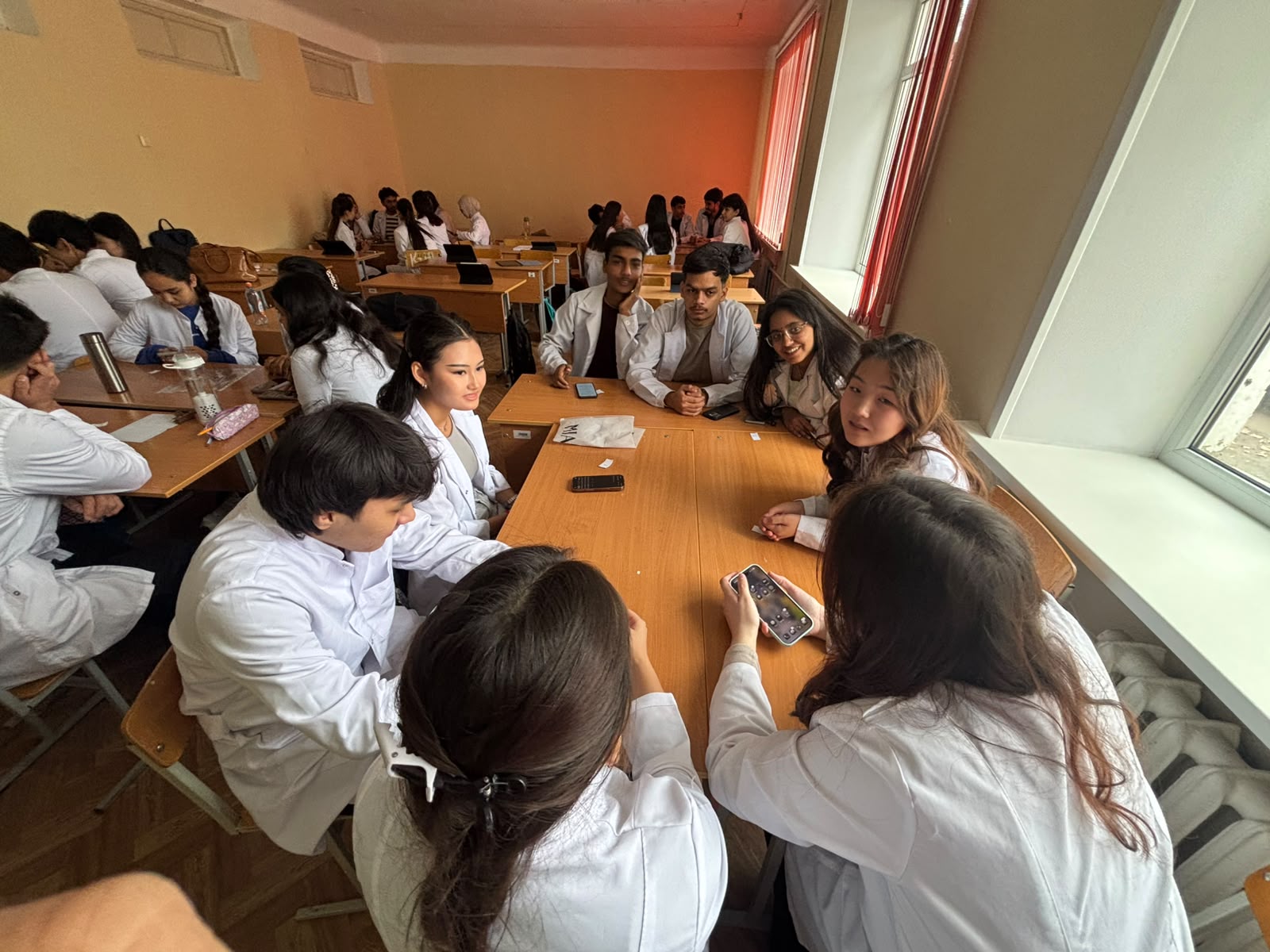
The event brought together students of the International Faculty (group 2006a), students of the “IT Medicine” educational program (group 2002), and first-year students of the “Dentistry” educational program (group 1001). Bringing together students from different educational programs and cultural traditions made it possible to create an interdisciplinary and intercultural format of the meeting.
International Faculty students Chhavi Dadhich and Akanksha Maurya delivered a presentation “Dialogue of Cultures: What the Indian Approach to Self-Improvement Can Teach a Kazakhstani Entrepreneur.” In their presentation, they explored features of the Indian culture of self-improvement, attitudes toward education, work, personal discipline and entrepreneurial initiative, and highlighted values that may be interesting to young people in Kazakhstan. The presentation provided a basis for a lively intercultural dialogue and exchange of opinions between Kazakhstani and international students.
First-year students of the “Dentistry” educational program, Symbat Baghazat and Meirzhan Tursunbayev, delivered a presentation in English “Personal Brand as a Social Asset: Self-Presentation and Reputation in the Age of Digital Economy.” Participants discussed how the digital environment influences the professional image of a young professional, why reputation is becoming an important intangible asset, and what responsibility individuals bear for their behavior on social media.
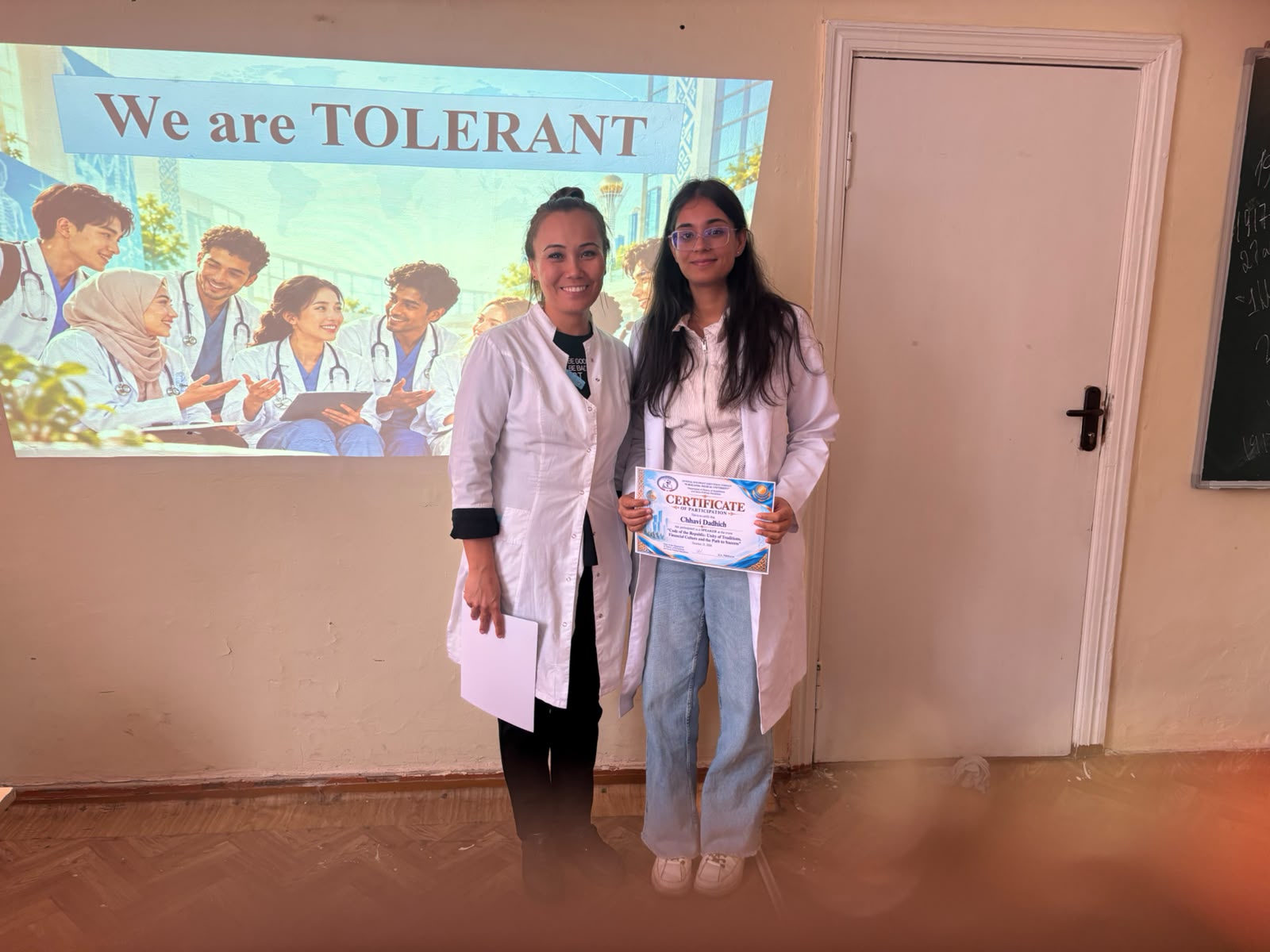
The presentations were followed by an open discussion. Students asked the speakers questions, compared cultural approaches in Kazakhstan and India, and discussed the relationship between personal success and education, financial literacy, entrepreneurial thinking, professional reputation and respect for cultural differences.
The practical part of the event was conducted in an interactive format. Participants were divided into mixed teams comprising representatives of different educational programs. The teams were given situational tasks and problem-based cases related to intercultural communication, tolerance, financial behavior, entrepreneurial initiative and personal brand. Students worked together to find solutions, supported their positions with arguments and presented the results of their teamwork. This format made it possible not only to discuss the issues theoretically, but also to demonstrate in practice the value of dialogue, cooperation and respect for different points of view.
The event demonstrated that the ideas of social unity, equal opportunities, responsibility and creative youth initiative can be considered in terms of different course units and cultural experiences. On the eve of the International Day for Tolerance, the meeting acquired especial significance as a platform for open dialogue among students from different educational programs and cultures. The ability to listen to one another, respect differences, collaborate and, at the same time, take on responsibility for one’s own professional and personal development helps build the social capital of young people that is essential for Kazakhstan’s further development.
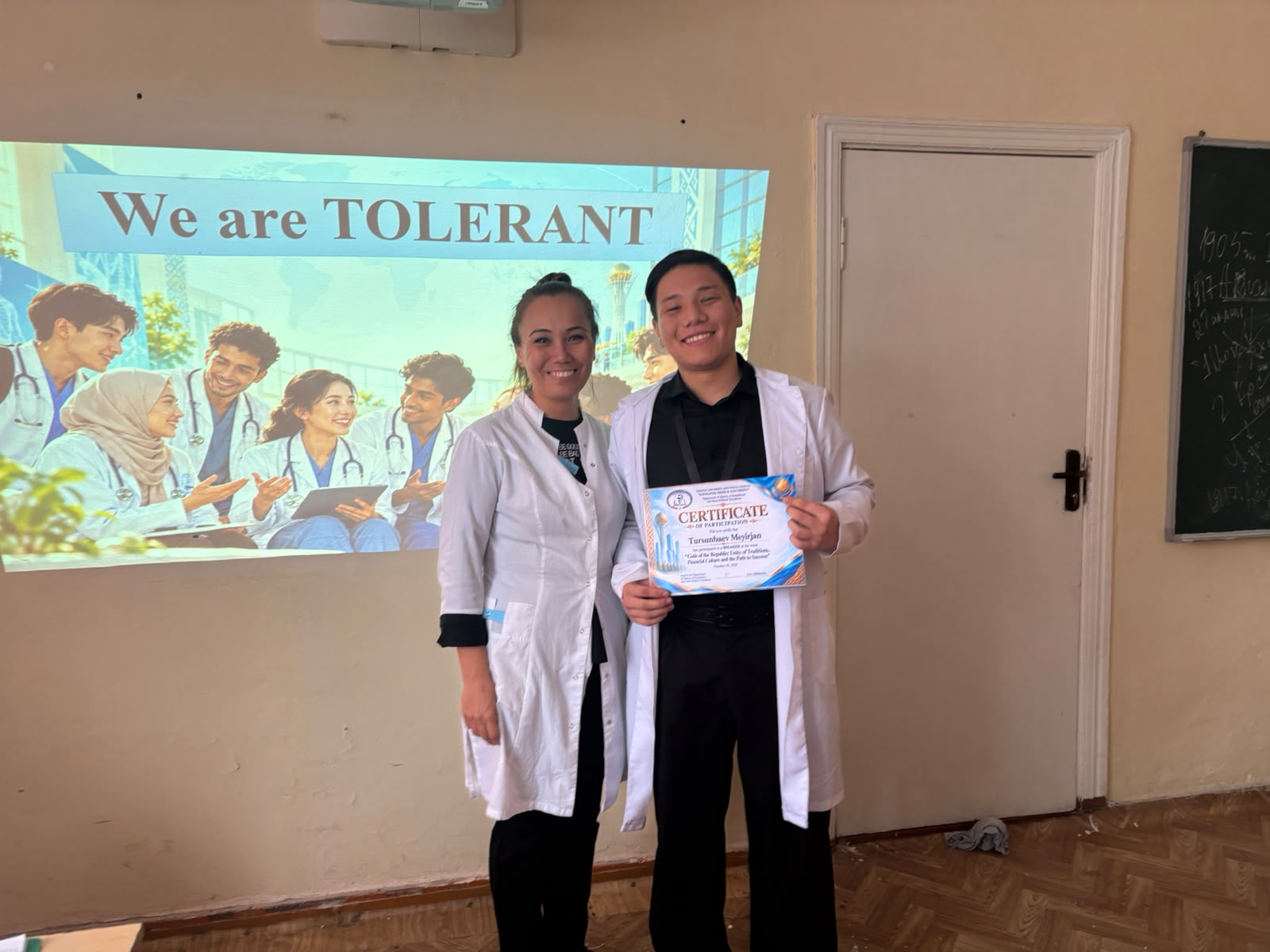
Meeting planner — Assistant Professor at the Department of History of Kazakhstan and Social-Political Sciences, Dinara Yermekovna Jakupova
